

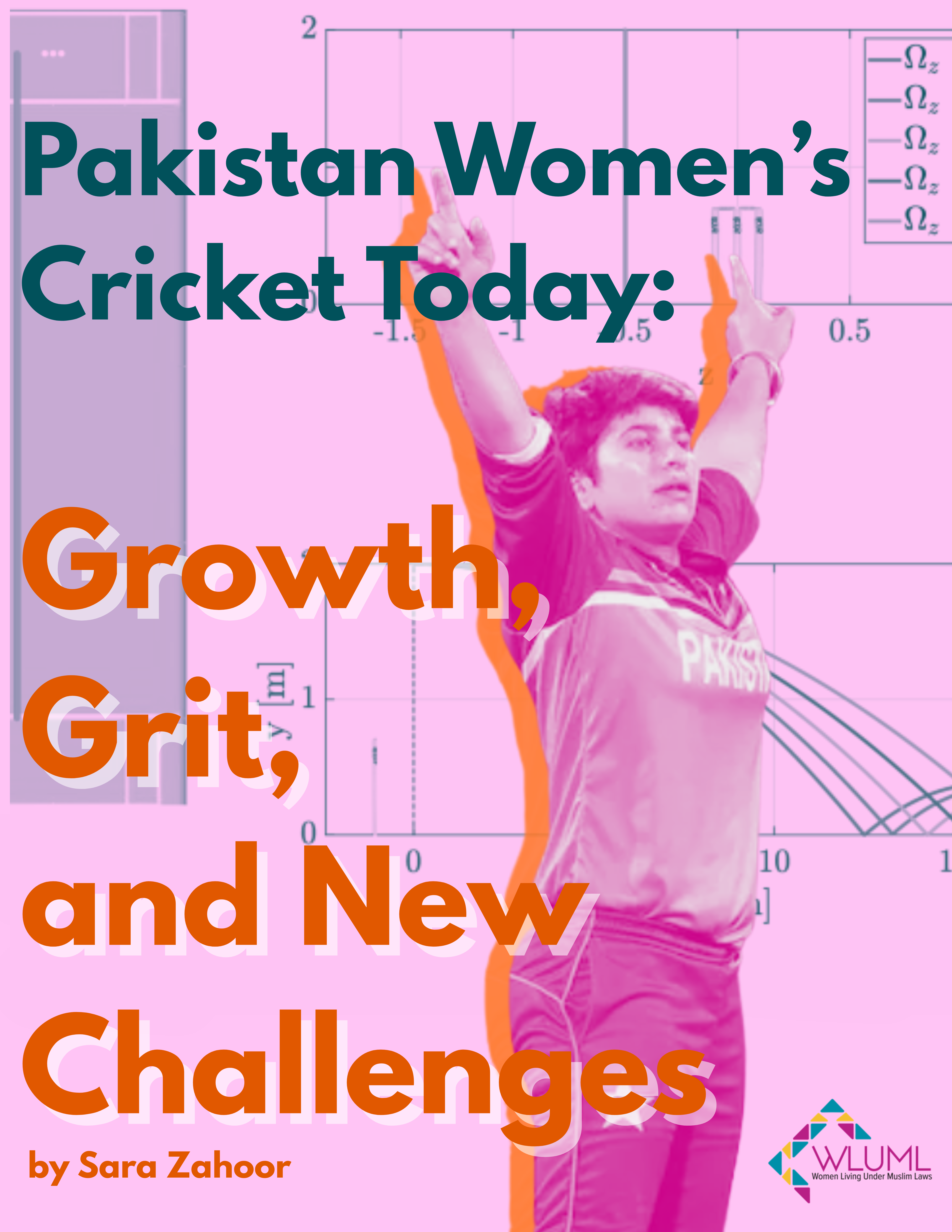
Pakistan’s captain, Nida Dar, the top wicket-taker in Women’s T20I’s.
Today, Pakistan’s women’s cricket team stands on firmer ground than it did two decades ago, but it is still carving out its space in a competitive and fast-evolving international landscape. With institutional backing from the Pakistan Cricket Board (PCB), regular participation in ICC events, and a growing talent pool, the team has evolved into a symbol of progress and resilience.
Players like Bismah Maroof, Nida Dar, and Diana Baig have become household names, representing a new era where skill meets professionalism. Bismah’s leadership and motherhood, for instance, made headlines globally and became a moment of inspiration for women athletes balancing sport and family. Nida Dar, nicknamed ‘Lady Boom Boom’ for her explosive all-round performances, has been instrumental in key victories and even represented Pakistan in international leagues.
The team’s performance, however, remains inconsistent. In ODIs and T20Is, Pakistan often struggles against top-tier teams like Australia and England, although it remains competitive against mid-tier sides such as Sri Lanka, West Indies, and Bangladesh. The 2022 ICC Women’s Cricket World Cup and the 2023 ICC Women’s T20 World Cup highlighted both the promise and the gaps. A lack of depth in the batting lineup and exposure to high-pressure games continues to be a challenge.
However, the introduction of domestic women’s leagues, like the PCB Women’s T20 tournament, and the increasing visibility of women in coaching and administrative roles are signs of structural progress. Younger players such as Fatima Sana and Ayesha Naseem are emerging with potential to redefine the team’s future. The PCB’s growing investment in grassroots development, central contracts, and player welfare also signifies a shift toward sustainable growth.
Media coverage, once negligible, is also improving. Matches are now more widely broadcasted, and digital platforms are helping build fandom. Public support, while not as enthusiastic compared to the men’s team, is on the rise, particularly among younger audiences and urban centers.
Pakistan’s women’s team today is in transition. It has moved from the margins to the mainstream but now faces the challenge of converting presence into performance. With the right support, and continued exposure to international cricket, this team has the potential not only to win games but to change narratives, over and over again.
By Sara Zahoor
Sara Zahoor is a current undergraduate student at Trinity College, pursuing a B.A. in Public Policy & Law with a concentration in Policy Analysis. She can be contacted at @[email protected].
Here at Women Living Under Muslim Law, we believe it’s not only important, but vital to acknowledge and share the achievements of women. To claim their equal citizenship, as well as the right to both shape and reshape cultural settings that have historically excluded women, much to the detriment of national and global prosperity.